AGBC Board Charts New Strategic Direction
The African Genetic Biocontrol Consortium (AGBC) held a three-day Board Induction Programme from 9–11 November 2026 at Nairobi Safari Club, bringing together the Board of Directors, the Advisory Council (technical experts) and Secretariat members to reflect on the Consortium’s mandate, strategic priorities and future direction.
The programme provided an opportunity to examine AGBC’s institutional capacity, governance, stakeholder partnerships and role in advancing African perspectives on genetic biocontrol, biosafety and emerging technologies.
Discussions emphasised the need to strengthen regional collaboration, scientific communication, knowledge sharing and engagement with policymakers. Participants also explored opportunities to leverage existing African institutions and regional platforms, including COMESA, to support policy dialogue and regulatory harmonisation.
AGBC Founder and Chairman, Dr Willy Tonui, while sharing the Consortium’s journey, noted that AGBC has made significant strides and that the renewed strategic direction would help propel the organisation towards becoming an African Centre of Excellence in emerging technologies.
He emphasised the need to adapt international scientific and regulatory frameworks to Africa’s unique circumstances.
“There is a lot of information on the Cartagena Protocol and other international treaties. These need to be customised to our situation,” he said.
AGBC currently advances its work through technical committees. Dr Tonui noted that the new strategic direction would further strengthen the Consortium’s institutional capacity by expanding regional research capabilities and providing training for key oversight bodies, including Institutional Biosafety Committees and Ethics Review Committees.
Board of Directors
Members of the African Genetic Biocontrol Consortium Board of Directors during the Board Induction Programme held in Nairobi from 9–11 November 2026. The newly appointed Board is charting a strategic direction to position AGBC as a leading global voice in genetic biocontrol technologies by strengthening Africa’s scientific voice and engagement with sub-regional institutions.

L-R Chris Oyier- Company Secretary, Dr. Robert Karanja -Member | Seated: Prof. Dorington Ogoyi- Member
Prof. Esther Kioko-Honorary Secretary, Dr. Willy Tonui: Honorary Chair, Prof. Moses Kiptui -Honorary Treasurer, Rosalia Omungo -Chief Executive Officer)
A key task undertaken during the meeting was reviewing AGBC’s 2024–2029 Strategic Framework and developing a practical 12-month action plan aligned with institutional priorities and potential funding opportunities.
The Board also explored opportunities to position AGBC beyond its convening role as a recognised African scientific knowledge and policy resource, supporting evidence-based decision-making, capacity building and innovation.
Participants highlighted the importance of documenting African scientific expertise and success stories through publications, expert interviews, podcasts and other knowledge products.
The meeting took place at a time when declining donor support and global funding cuts threaten gains made in health, agriculture, emerging technologies and other development sectors. Participants noted that reduced investment has created significant gaps and challenged AGBC to explore opportunities to help address them through strategic partnerships, scientific expertise and innovative approaches.
The induction reinforced AGBC’s commitment to strengthening institutional effectiveness, building strategic partnerships and advancing African leadership in responsible genetic biocontrol.
The discussions laid a foundation for translating AGBC’s strategic ambitions into practical programmes with measurable impact across Africa.

The Board of Directors, the Advisory Council and the Secretariat pose for a picture
Key Strategic Priorities Identified
The meeting identified several priority areas for AGBC to consider as it strengthens its regional and international engagement:
- Science diplomacy: Promote science diplomacy by strengthening engagement with political leaders and policymakers to advance practical solutions and African leadership in emerging technologies.
- Data sharing and governance: Prioritise transboundary data sharing and portability, including the development of regional data protocols to support scientific collaboration.
- Regional and international partnerships: Expand collaboration across Africa and with institutions in Asia, Australia and other regions, while strengthening engagement with Regional Economic Communities.
- African Union engagement and capacity building: Support relevant African Union agencies in addressing emerging biotechnologies through regulatory development, training and institutional capacity building.
- Indigenous knowledge and biodiversity: Promote African perspectives and indigenous knowledge while supporting the implementation of the Kunming-Montreal Global Biodiversity Framework (KMGBF) across African countries.
- Climate change and biodiversity initiatives: Strengthen participation in climate change and Convention on Biological Diversity (CBD) initiatives, including relevant Conferences of the Parties (COP).
- Science communication and public engagement: Strengthen scientific communication and develop accessible, evidence-based information to improve public understanding of genetic biocontrol and emerging technologies.
Through these priorities, AGBC aims to consolidate its position as a trusted African platform for scientific collaboration, policy engagement and responsible innovation, while ensuring that Africa’s perspectives and priorities are reflected in regional and global discussions on genetic biocontrol.
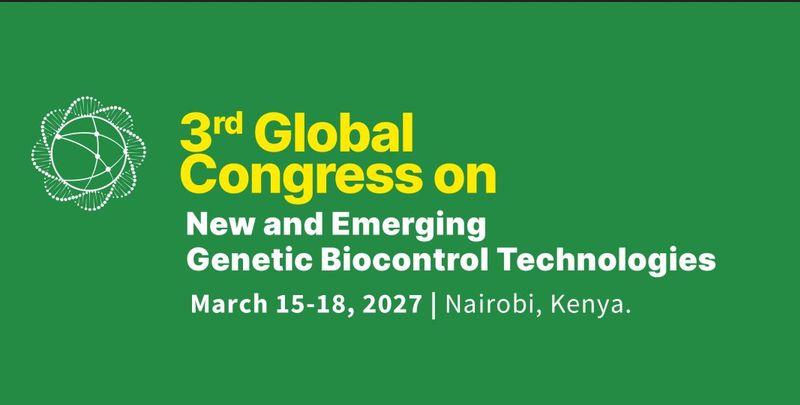
The consortium is preparing for the 3rd Global Congress on New and Emerging Biocontrol Technologies, scheduled for March 15-18, 2027 in Nairobi.