EBOLA VIRUS DISEASE: UNDERSTANDING THE CRISIS AND THE CURE
The Ebola outbreak is not yet under control. The virus is spreading in the Democratic Republic of Congo and Uganda without licensed Bundibugyo-specific vaccines or therapeutics. The African Centres for Disease Control (CDC), declared a Public Health Emergency of Continental Security in May 2026.
The head of the Africa’s CDC warned that the Ebola outbreak in the Democratic Republic of Congo (DRC) could be the worst ever, saying it could cost billions of dollars to contain later if critical weaknesses in the response are not addressed quickly.
So far, 139 deaths have been recorded in the growing Ebola outbreak and the World Health Organization says upto 600 cases are suspected.
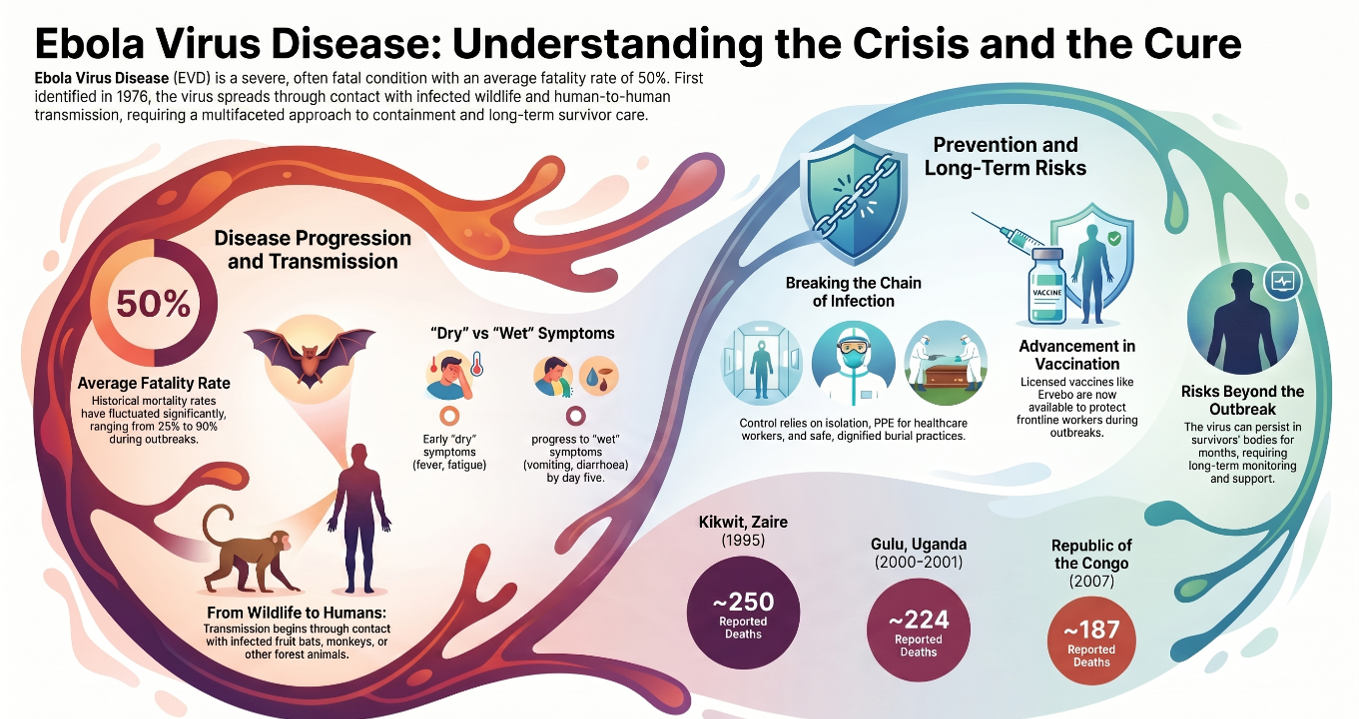
Ebola virus disease is a rare but severe and often fatal illness caused by viruses in the genus Orthoebolavirus. With an average case fatality rate of approximately 50% – though rates have historically fluctuated between 25% and 90% – outbreaks present a significant challenge to public health systems.
Origins and Initial Outbreaks
The disease was first identified in 1976 through two simultaneous outbreaks. One occurred in Nzara (in modern-day South Sudan) involving the Sudan virus, while the other took place in Yambuku (in modern-day Democratic Republic of the Congo) involving the Ebola virus. The disease’s name is derived from the Ebola River, located near the village of Yambuku.
In the recent outbreak, key critical gaps include contact tracing, supplies, and a USD 21.5 million funding gap that must be urgently addressed.
In a recent high level briefing on the Bundibugyo Ebola outbreak, the Director-General of the World Health Organisation pointed out trust deficit as one of the factors undermining the response initiatives.
“Community mistrust is a serious barrier. Some community leaders told me that they believe Ebola is not real,” said Dr. Tedros Adhanom Ghebreyesus.
“Building trust with the communities is therefore critical to bringing the outbreak under control,” he advised.
The outbreak is being fought without vaccines or therapeutics.
So far, WHO has expanded capacity for suspected cases through supporting the Democratic Republic of the Congo and Uganda. WHO is strengthening surveillance, clinical preparedness and management, delivery of supplies and community engagement as well as cross-border preparedness.
Signs and Symptoms
- The incubation period—the time from infection to the onset of symptoms—ranges from 2 to 21 days. Symptoms often progress through two phases( https://www.cdc.gov/ebola/signs-symptoms/index.html)
- “Dry” Symptoms (Early Phase): Symptoms often appear suddenly and include fever, severe headache, fatigue, muscle and joint pain, and a sore throat. Because these are non-specific, they are frequently confused with more common diseases like malaria or typhoid fever.
- “Wet” Symptoms (Later Phase): Usually starting around day four or five, patients may experience vomiting, diarrhea, abdominal pain, and a skin rash.
- Advanced Complications: Some patients develop impaired kidney and liver function. While less frequent than commonly perceived, internal and external bleeding (such as from the nose, gums, or in stools) can occur later in the disease. Impact on the central nervous system may also cause confusion, irritability, and aggression.
Prevention and Control Measures
Controlling an outbreak requires a multifaceted approach focused on breaking the chain of transmission:
- Reducing Wildlife-to-Human Risk: Avoiding contact with infected fruit bats or monkeys and refrain from consuming their raw meat.
- Preventing Human-to-Human Spread: Avoiding direct contact with the blood or bodily fluids of infected or deceased individuals, as well as contaminated surfaces. Patients should be isolated in designated treatment centers.
- Safe Burial Practices: Burial ceremonies involving direct contact with the deceased are major transmission risks; therefore, safe and dignified burials are essential.
- Healthcare Precautions: Health workers must strictly follow infection control protocols, including hand hygiene and the use of Personal Protective Equipment (PPE).